
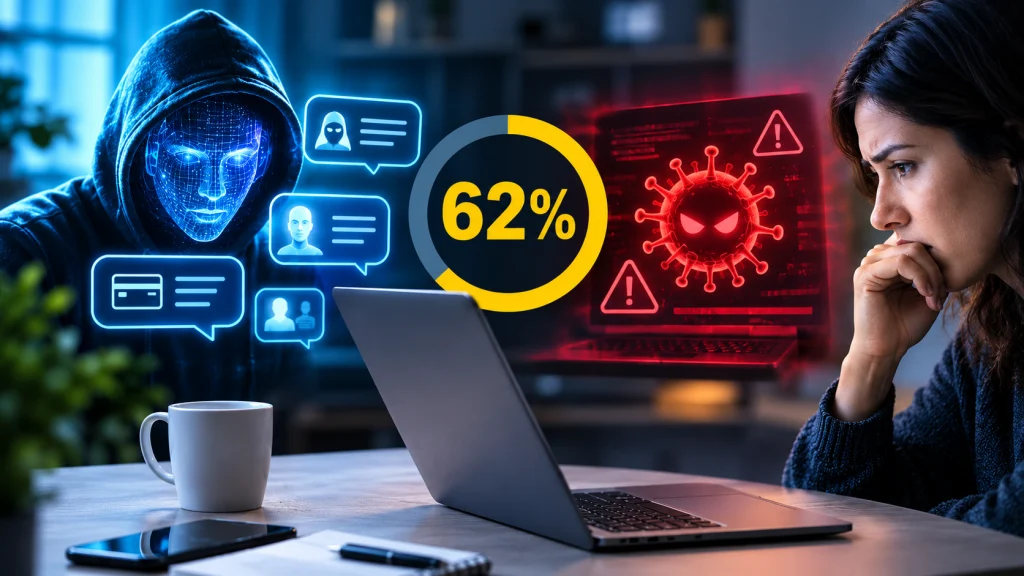
A new PCMag survey reveals 62% of Americans fear AI scams more than viruses. See why weekly scam rates are surging and what it means for you.
Quick Answer
A PCMag survey found 62% of Americans view AI scams as more dangerous than traditional computer viruses. Run by CNET Group in September 2026, the study reveals weekly scam encounters are surging.
When comparing ai scams vs computer viruses, the clear majority of Americans now view automated, machine-driven deception as the greater danger. In a national study conducted by CNET Group, 62% of respondents agreed that artificial intelligence scams pose a bigger threat to their digital safety than classic malware infections.
What Happened
Between September 9 and September 12, 2026, CNET Group—the parent organization behind PCMag, Mashable, and ZDNET—polled 1,000 adults across the United States using the Suzy Insights platform. The findings were reported by Neil J. Rubenking, Principal Writer for Security at PCMag, on October 19, 2026, and updated on October 24, 2026.
When presented with the statement that AI-powered scams are now more dangerous than traditional malware and viruses, 62% of participants indicated they agreed or strongly agreed. The survey produced striking artificial intelligence scam statistics showing how frequently users encounter fraudulent attempts.
More than 80% of respondents reported receiving fraudulent phone calls or deceptive emails at least once a week, with some seeing them daily. Furthermore, over 76% of surveyed adults stated they receive scam text messages on a weekly basis or more frequently.
AI Scams vs Computer Viruses: Why the Threat Landscape Shifted
Many consumers actively question whether are ai scams worse than viruses, and security professionals note that the delivery method explains the growing concern. Traditional malware typically requires a malicious executable file, an unpatched system flaw, or a compromised download to infect a computer.
Alina Bizga, a security analyst at Bitdefender, explained the contrast when assessing the survey results. “While traditional malware remains a serious threat, AI-powered scams are becoming the more immediate risk for everyday people,” Bizga stated. “You don’t need to download a malicious file to lose money or have an account taken over. A convincing text, a fake ad in your…”
Different types of artificial intelligence scams rely heavily on social manipulation rather than breaching operating system defenses. Because machine-learning tools can craft personalized messages, mimic writing styles, and generate convincing media without spelling errors, attackers can deceive users without running executable code on their hardware.
What This Means for You
With more than three-quarters of Americans facing deceptive communications weekly, knowing how to protect against ai fraud requires a shift in daily habits. While security software remains necessary to block unauthorized file activity, software filters alone cannot stop every deceptive message.
To reduce your risk, keep these practical rules in mind:
- Never click links inside unexpected text messages or emails claiming your accounts are suspended or compromised.
- Independently verify urgent requests from friends or financial institutions by calling verified phone numbers directly.
- Establish an offline family safe word to verify identity in the event of an urgent phone call claiming an emergency.
- Keep multi-factor authentication enabled on all primary accounts, and never share security codes over the phone.
The Ongoing Battle of AI Scams vs Computer Viruses
The debate surrounding ai scams vs computer viruses demonstrates that human deception has eclipsed file-based infection as the top consumer concern. Modern operating systems handle virus detection well, but machine-generated messages directly target human trust.
Because scam frequency continues to rise across calls, texts, and email, verifying sender identities before reacting to urgent notices remains your strongest defense.
Sources: PCMag Australia, PCMag, pcmag.com, hacks.gr.