
Quick Answer
The Nintendo Switch 2 significantly upgrades the hybrid console experience with powerful new hardware, a stunning 120 Hz HDR display, and advanced graphics features like DLSS. It’s an ideal choice for gamers seeking a versatile portable and home console experience that pushes performance boundaries.
Best for: Gamers upgrading from an original Switch or Switch Lite, new buyers wanting a powerful and versatile hybrid console, and those who prioritize high refresh rates and advanced graphics like DLSS in a portable form factor.
Skip it if: You primarily game on a TV and expect 4K with VRR, or if you are not ready for an investment in a new console generation.
📊 Key Specs at a Glance
| Feature | Nintendo Switch 2 |
|---|---|
| Display | 7.9-inch wide color gamut LCD, 1080p, HDR10, 120 Hz VRR |
| Processor | Custom Nvidia Tegra T239 (Drake) |
| CPU | Octa-core ARM Cortex-A78C, up to 1.7 GHz |
| GPU | Ampere (1536 CUDA cores), DLSS, hardware ray tracing |
| Memory | 12 GB LPDDR5X (9 GB for developers) |
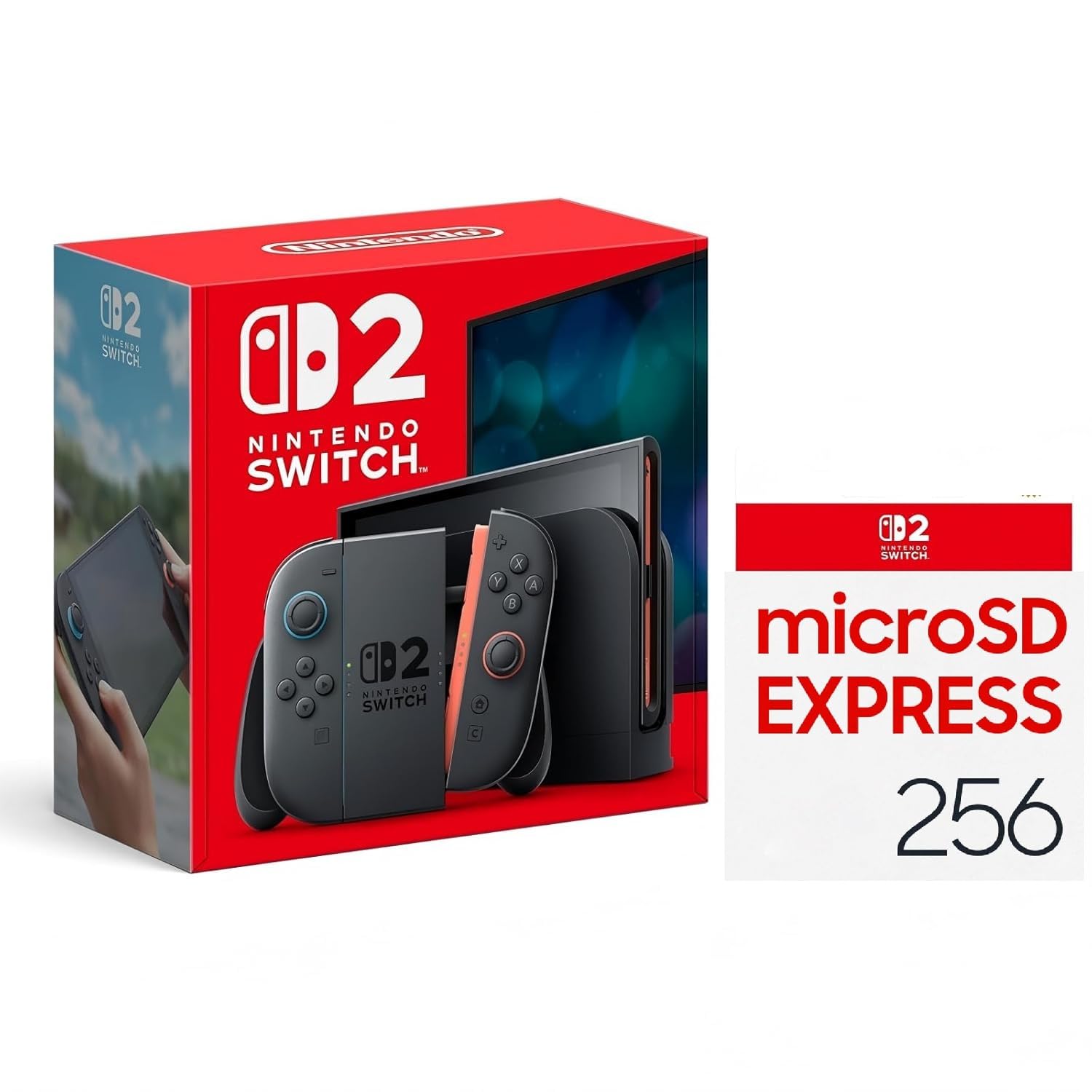
| Storage | 256 GB UFS 3.1, expandable via microSD Express (up to 2 TB) |
| Battery Life | 2 to 6.5 hours |
| Charging Time | 3 hours |
| Connectivity | Wi-Fi 6, 2x USB-C |
| Dock | Built-in Ethernet, 2x USB 2.0, HDMI 2.1 |
| Weight (console only) | Approx. 401g |
| Weight (with Joy-Cons) | Approx. 534g |
Design and Build
The Nintendo Switch 2 maintains the familiar hybrid console design, allowing you to play handheld, tabletop, or docked to a TV. Its centerpiece is a larger 7.9-inch wide color gamut LCD touchscreen, which significantly enhances your portable gaming experience. This display boasts a sharp 1080p resolution and supports HDR10, offering vibrant visuals.
One of the most notable upgrades is the variable refresh rate (VRR) of up to 120 Hz, making gameplay smoother and more responsive. The console alone weighs approximately 401g, increasing to about 534g with the new Joy-Con 2 controllers attached. These updated controllers can even function like computer mice, hinting at precise optical sensors for new gameplay possibilities.
Performance and Graphics
Under the hood, the Nintendo Switch 2 is powered by a custom Nvidia Tegra T239 “Drake” system on a chip. This processor brings substantial performance gains over its predecessor. Its octa-core ARM Cortex-A78C CPU can reach speeds up to 1.7 GHz, ensuring fluid game operation.
The GPU features Nvidia’s Ampere architecture with 1,536 CUDA cores, enabling advanced graphics technologies such as Deep Learning Super Sampling (DLSS) and hardware-enabled ray tracing. These additions deliver more realistic lighting, reflections, and overall visual fidelity previously unseen on a Nintendo console. With 12 GB of LPDDR5X memory, of which 9 GB is available to developers, the system has ample resources for demanding titles. The 256 GB UFS 3.1 internal storage provides faster loading times, and it is expandable up to 2 TB using microSD Express cards.
Key Features and Connectivity
Beyond raw power, the Nintendo Switch 2 introduces several important features. The console supports Wi-Fi 6 for faster, more reliable wireless connections. It includes two USB-C ports, one on the bottom and one on top, offering flexible charging and accessory options.
The redesigned dock is also a major improvement, now featuring a built-in Ethernet connector for stable online play, two USB 2.0 ports, and an HDMI 2.1 port for high-quality TV output. For communication, the console integrates a microphone with noise-cancelling technology for clearer GameChat. A “Nintendo Switch 2 Camera” accessory is also available, expanding options for video chat and interactive gameplay.
✅ Pros and ❌ Cons
- ✅ Significantly more powerful processor with DLSS and hardware ray tracing.
- ✅ Stunning 7.9-inch 1080p LCD display with 120 Hz VRR and HDR10.
- ✅ Increased 12 GB LPDDR5X memory for more demanding games.
- ✅ Faster 256 GB UFS 3.1 internal storage, expandable with microSD Express.
- ✅ Redesigned dock includes built-in Ethernet and HDMI 2.1.
- ❌ VRR support is limited to the internal display, not available over HDMI.
- ❌ Battery life, ranging from 2 to 6.5 hours, may feel short for extended gaming sessions.
- ❌ Increased weight of the console and Joy-Cons compared to previous Switch models.
Who Should Buy It (and Who Shouldn’t)
If you’re wondering, “is the Nintendo Switch 2 review truly positive enough to justify an upgrade?”, consider your current gaming habits. The Nintendo Switch 2 is an excellent purchase if you are upgrading from an original Nintendo Switch or Switch Lite, as the performance and display improvements are substantial. Newcomers to the Nintendo ecosystem who want a versatile, state-of-the-art portable and home console experience will also find it highly appealing. It’s particularly for you if you value the latest graphics technologies like DLSS and ray tracing, or prioritize a smooth 120 Hz VRR display in handheld mode.
However, you might want to skip it if your primary gaming is done exclusively on a TV, especially if you expect 4K output with VRR support. The lack of VRR over HDMI could be a dealbreaker for dedicated TV players. Those on a strict budget for new hardware and games may also find the investment considerable, given its premium features.
Alternatives to Consider
For a direct portable gaming comparison, consider the Steam Deck OLED. It offers a similar handheld form factor with a different game library and a focus on PC gaming. If you’re looking for a dedicated home console experience with robust power and a vast library, the Xbox Series X provides top-tier performance for traditional TV gaming, though without the portable flexibility of the Switch 2.
FAQ
What makes the Nintendo Switch 2 review stand out among other consoles?
The Nintendo Switch 2 stands out by delivering a significant leap in graphics and performance within a hybrid console framework. Its unique blend of portable and home gaming, combined with advanced features like DLSS and hardware ray tracing, sets a new standard for Nintendo’s handheld experience. Many seeking the best Nintendo Switch 2 review will find its balance of innovation and versatility compelling.
How does the Nintendo Switch 2 review compare to the Switch OLED model?
When considering a Nintendo Switch 2 review vs OLED model, the Switch 2 represents a full generational leap. While the OLED model offered a vibrant screen, the Switch 2 brings a more powerful processor (Tegra T239), a higher resolution 1080p display with a 120 Hz VRR, increased RAM, faster storage, and advanced graphics features like DLSS and ray tracing. These are major upgrades beyond just a screen enhancement.
Is the Nintendo Switch 2 worth the upgrade if I already own a Switch?
For most existing Switch owners, particularly those with the original model or Switch Lite, the Nintendo Switch 2 is a worthwhile upgrade. The improved display, performance, and advanced graphics make a substantial difference in gameplay quality and visual fidelity. If you are asking “nintendo switch 2 review is it worth it?” and value cutting-edge portable gaming, the answer is likely yes.
Final Verdict
The Nintendo Switch 2 marks a pivotal moment for Nintendo, delivering a true next-generation hybrid console experience. This comprehensive Nintendo Switch 2 review highlights its impressive new hardware, from the powerful Nvidia Tegra T239 processor supporting DLSS and ray tracing, to its stunning 7.9-inch 120 Hz VRR HDR display. While the lack of VRR over HDMI is a point of contention for TV gamers, the portable experience is unparalleled within the Nintendo ecosystem.
Released on June 5, 2025, the Nintendo Switch 2 sets a new benchmark for what a handheld console can achieve. It’s an essential purchase for those seeking cutting-edge performance in a versatile form factor, ensuring Nintendo’s place at the forefront of innovative gaming.
Sources: wikipedia.org, digitalfoundry.net, reddit.com, nintendolife.com, gamespot.com, laptopmag.com.
Looking for Active Tech Sales?
Smart Curation: Skip hours of scrolling. Our TOP TECH DEALS hub gathers active promotions, notable price drops, and highly rated gear we find across the market.