
Quick Answer
Bluetooth works by transmitting short-range radio signals across the 2.4 GHz band to create a secure personal area network between devices.
When two gadgets pair, they swap unique device IDs and encryption keys to build an authenticated link. To avoid interference from other electronics sharing the same wireless spectrum, Bluetooth constantly shifts channels hundreds of times per second using frequency hopping.
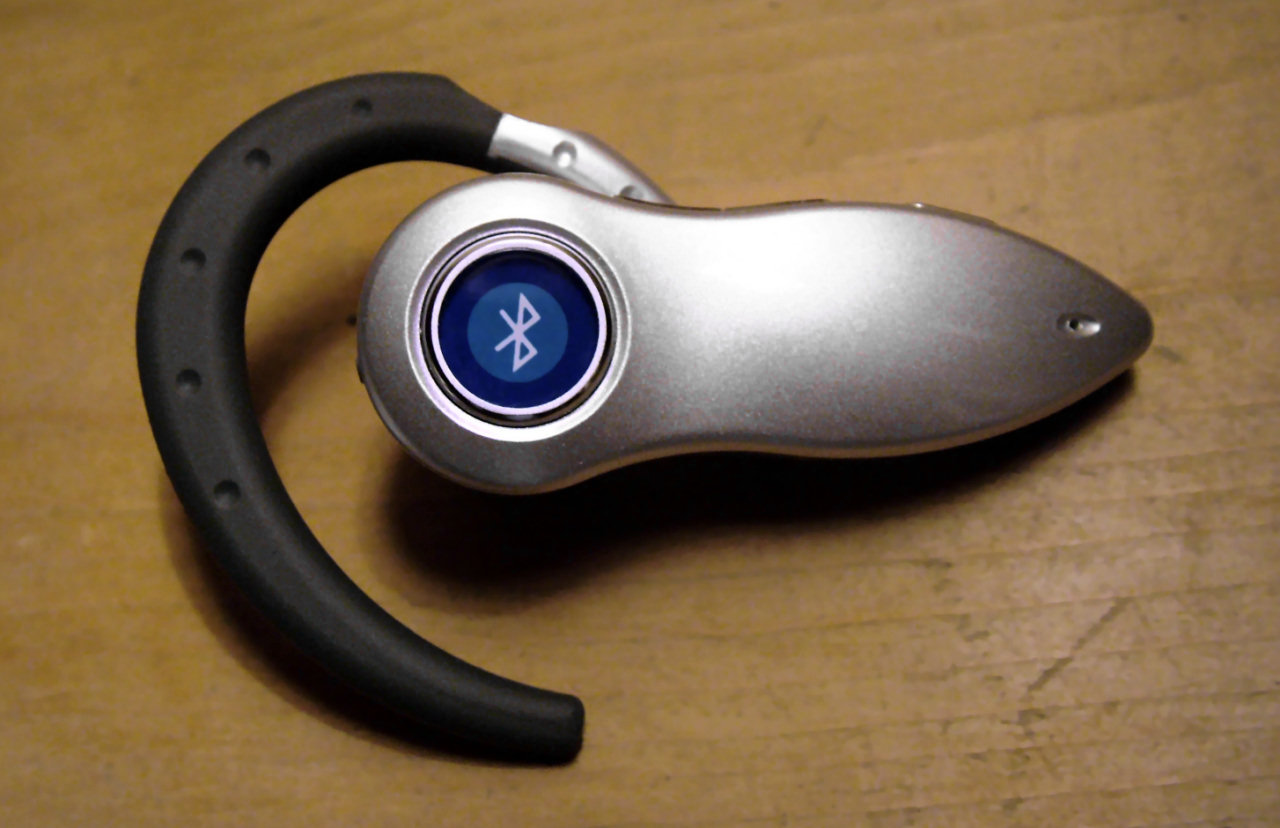
If you want to understand how does bluetooth work, the technology boils down to ultra-localized radio transmissions that replace tangled cables. Instead of routing data through a home router or cellular tower, Bluetooth creates a direct link between devices within your personal space.
Much like the open networking protocols highlighted in our look at who invented the internet, Bluetooth succeeded because its creators established a common standard that any manufacturer could adopt.
| Specification | Details |
|---|---|
| Initial Invention | 1994 by Dr. Jaap Haartsen at Ericsson |
| Frequency Spectrum | 2.402 GHz to 2.48 GHz (ISM Band) |
| Base Transmission Power | 2.5 milliwatts (Class 2 baseline) |
| Governing Body | Bluetooth Special Interest Group (SIG) |
| Core Architecture | Personal Area Network (PAN) via radio frequency |
The Physics: How Does Bluetooth Work Across Radio Waves?
At its foundation, Bluetooth relies on high-frequency electromagnetic radiation to transmit digital data through the air. It operates within the globally unlicensed Industrial, Scientific, and Medical (ISM) band, specifically spanning frequencies from 2.402 GHz to 2.48 GHz.
When understanding how the physics of Bluetooth radio functions, imagine information split into tiny digital packets. A transmitter converts your digital photos, commands, or audio streams into radio waves sent in rapid bursts, which an antenna on the receiving device picks up and decodes back into raw data.
Because the signal is deliberately weak, it requires very little electricity. The original specification capped transmission power at roughly 2.5 milliwatts, making it ideal for battery-operated gear that cannot spare the power demanded by long-distance Wi-Fi antennas.
Adaptive Frequency Hopping: Beating Wireless Interference
The 2.4 GHz band is crowded with signals from Wi-Fi routers, baby monitors, and microwave ovens. To prevent static and dropped packets, Bluetooth relies on a technique called Adaptive Frequency Hopping (AFH).
Instead of broadcasting on one fixed channel, the protocol divides its spectrum into multiple individual slices. Connected devices leap between these channels together at rapid intervals, continuously monitoring the airwaves to bypass frequencies clogged by active Wi-Fi traffic.
This automated dodging keeps connections stable without requiring any manual setup from you. If one channel experiences heavy packet loss, the devices automatically mark that frequency as degraded and reroute data through clearer paths.
The Pairing Process: Building a Secure Link
Before two devices exchange files or stream sound, they must complete a handshake known as pairing. During this setup phase, both units broadcast their identity and determine whether they share compatible communication profiles.
To keep unwanted eavesdroppers out, the devices generate shared cryptographic keys. On gadgets with screens, this step often requires confirming a matching PIN or numeric code before the link finalizes.
Once paired, the hardware forms an ad-hoc personal area network. The devices store each other’s addresses, allowing them to reconnect automatically whenever they enter each other’s operational zone.
Range and Audio Quality: What the Numbers Tell Us
Published documentation often lists conflicting numbers regarding maximum operational range. Early implementations were tuned for roughly 33 feet (10 meters) to keep power drain low.
Modern estimates vary widely across industry sources depending on hardware class and physical surroundings. While Forbes notes a baseline range of around 10 meters, smart home specialist MESHLE points out that modern standards reach up to 40 meters indoors and 200 meters outdoors. Enterprise provider Cassia Networks reports that specialized commercial beacons can achieve transmission spans up to 1.5 kilometers line-of-sight.
Audio quality has undergone a similar transformation. Early consumer headsets compressed sound heavily, creating an enduring myth that wireless audio is always tinny. Advanced codecs like LDAC and AAC transmit high-bitrate audio streams that match the clarity of traditional wired headphone jacks.
From Vehicles to Clinics: How Bluetooth Operates in Daily Life
Car manufacturers rely on these wireless profiles to handle hands-free voice calls, navigation alerts, and dashboard media playback. When you step into the cabin, your smartphone syncs its media controls directly to the dashboard infotainment cluster without needing a physical USB connection.
The tech is equally critical for modern accessibility. Digital hearing aids use ultra-efficient protocols to stream audio directly from phones and televisions straight into a user’s ear canal while preserving tiny hearing aid batteries.
Smartwatches and activity trackers also rely on Bluetooth Low Energy (LE) to push daily health metrics to your smartphone. These compact peripherals continuously relay updates and sensor data back to companion apps while sipping minimal battery power.
Fun Facts Most People Don’t Know
- A Viking king inspired the name: In 1997, Jim Kardach of Intel proposed “Bluetooth” after King Harald Blåtand, a 10th-century Scandinavian monarch who united warring Danish tribes.
- The logo is secret Viking writing: The Bluetooth emblem is a bind rune merging the Younger Futhark letters Hagall (ᚼ) and Bjarkan (ᛒ), representing King Harald’s initials.
- It started at a telecom giant: Dr. Jaap Haartsen created the foundational short-link technology in 1994 while working at Ericsson’s Mobile Terminal Division.
- A massive alliance runs it: While the Institute of Electrical and Electronics Engineers once cataloged it as IEEE 802.15.1, the technology is now owned and managed by the Bluetooth Special Interest Group (SIG), an alliance of more than 35,000 member companies.
FAQ
Why does a Bluetooth connection drop through thick walls?
Bluetooth operates on low-wattage 2.4 GHz radio frequencies that have trouble penetrating dense materials. Concrete, brick, metal framing, and even water absorb these high-frequency waves, drastically cutting down the usable range.
Does leaving Bluetooth turned on drain a phone’s battery?
Modern devices use Bluetooth Low Energy (LE), which sleeps in an idle state when not actively transmitting data. While an active, continuous audio stream consumes measurable power, leaving the radio on standby has an almost unnoticeable impact on battery drain.
Can two different Bluetooth devices scramble each other’s signals?
Direct conflicts are rare because of Adaptive Frequency Hopping. Even if multiple devices occupy the same physical room, they rapidly bounce across dozens of distinct channels, preventing continuous radio collisions.
Connecting Our Wireless World
Every time your wireless earbuds click into place or your watch syncs your morning routine, you are taking advantage of an intricate system of micro-watt radio signals. Learning how does bluetooth work reveals how simple radio waves and clever software work in tandem to eliminate everyday physical clutter.
By blending automatic channel hopping, lightweight security keys, and strict power conservation, Bluetooth remains the backbone of personal area networking across consumer electronics, vehicle dashboards, and enterprise hardware.
Sources: cisa.gov, britannica.com, howstuffworks.com, Wikipedia.